Although I’ve remained so close to the sport of swimming, its been over a year since I did a lap swim–and almost 15 years since I’ve swam competitively. This was until a friend of mine mentioned that he was going to do the Great Chesapeake Bay Swim. Since I knew that I had some open-water swims still sitting idly on my bucket list, I knew that this would be a good opportunity to get back in the water and take a crack at this subdiscipline of the swim world.
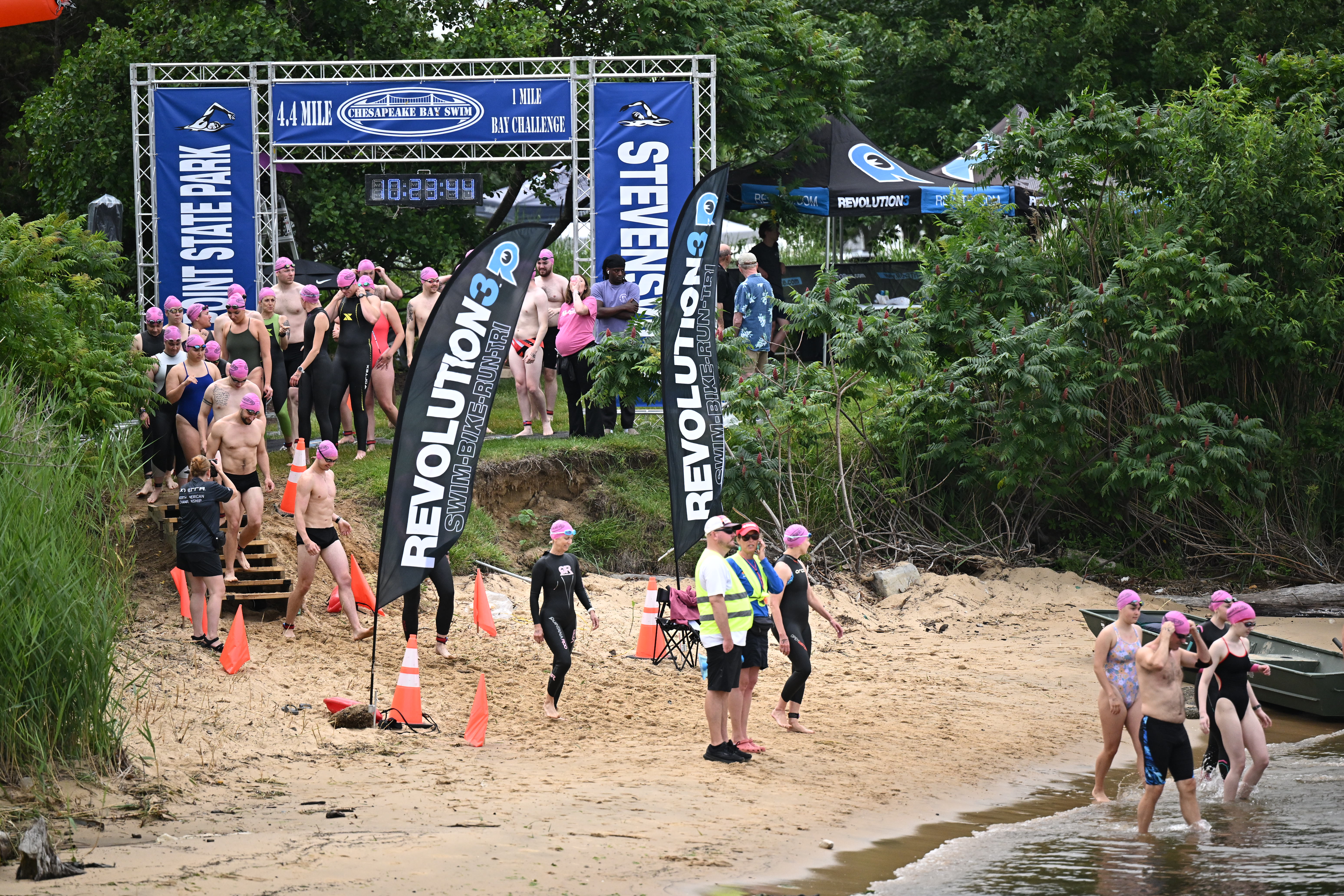
Since this was my first ever open water swim, I went into this event with a variety of concerns, which, with the benefit of hindsight, I hope to help clarify for you and convince you to take on the challenge of an open water swim–if this is something that you are interested in.
Here are some quick thoughts on what I’ve learned before, during, and after my first competitive open water swim.
3. Be Aware of Water Temperature and Conditions
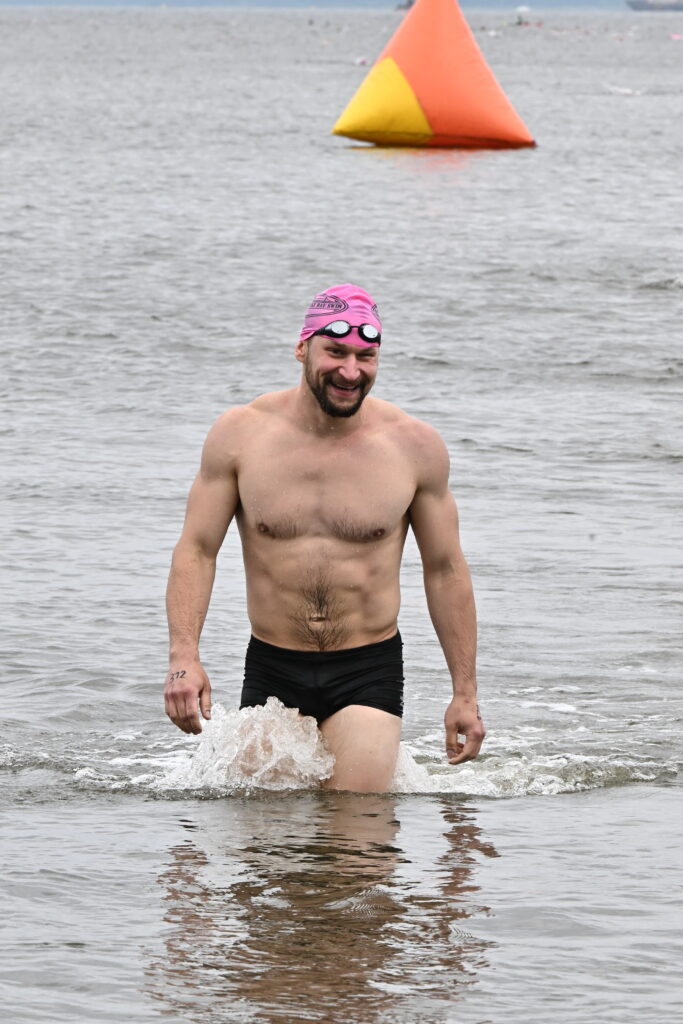
A big difference between the typical pool swim and open water swimming is the unpredictability of large bodies of water. Sure, you can anticipate the temperature to a certain degree, but you need to be checking in on data from nearby Buoys. In the case of this swim, the water was about 69 degrees.
I get cold water exposure on a daily basis by ending my shower with cold water. This strategy, however, is limited by the weather and how cold my tap water may happen to be at any given time. That being said, I am typically a big baby with cold water. Some open swims may allow for a wetsuit, some may not. A neoprene wetsuit can keep you very warm in very cold water, however, neoprene can limit your range of motion and may even cause overheating in mild environments.
In keeping with the English Channel Swimming Association, I chose to swim in a square leg suit. And although I am a crybaby in cold water, at 69 degrees, I was very comfortable even before the swim began. As the route continued into deeper water, the temperature most certainly dropped off as well. I would guess that the water temperature was another 10, or more, degrees cooler towards the deepest part of the swim. But even here, as the water was at its deepest, the cold did not bother me much. However, if the swim was going to begin in water around 60 degrees or so, I may have made a different choice in swim suits, likely opting for an open swim full-body wetsuit.
Open Swim wetsuits are cut differently than a typical surfer’s wetsuit, providing better range of motion, reducing drag, and overall leading to a better swim experience. But again, all I chose to wear was a Speedo Square Leg Endurance+ suit. I chose this primarily because I have a history with training in the endurance suits, and they typically have great longevity.
2. Have a Solid Grasp on Swimming Fundamentals
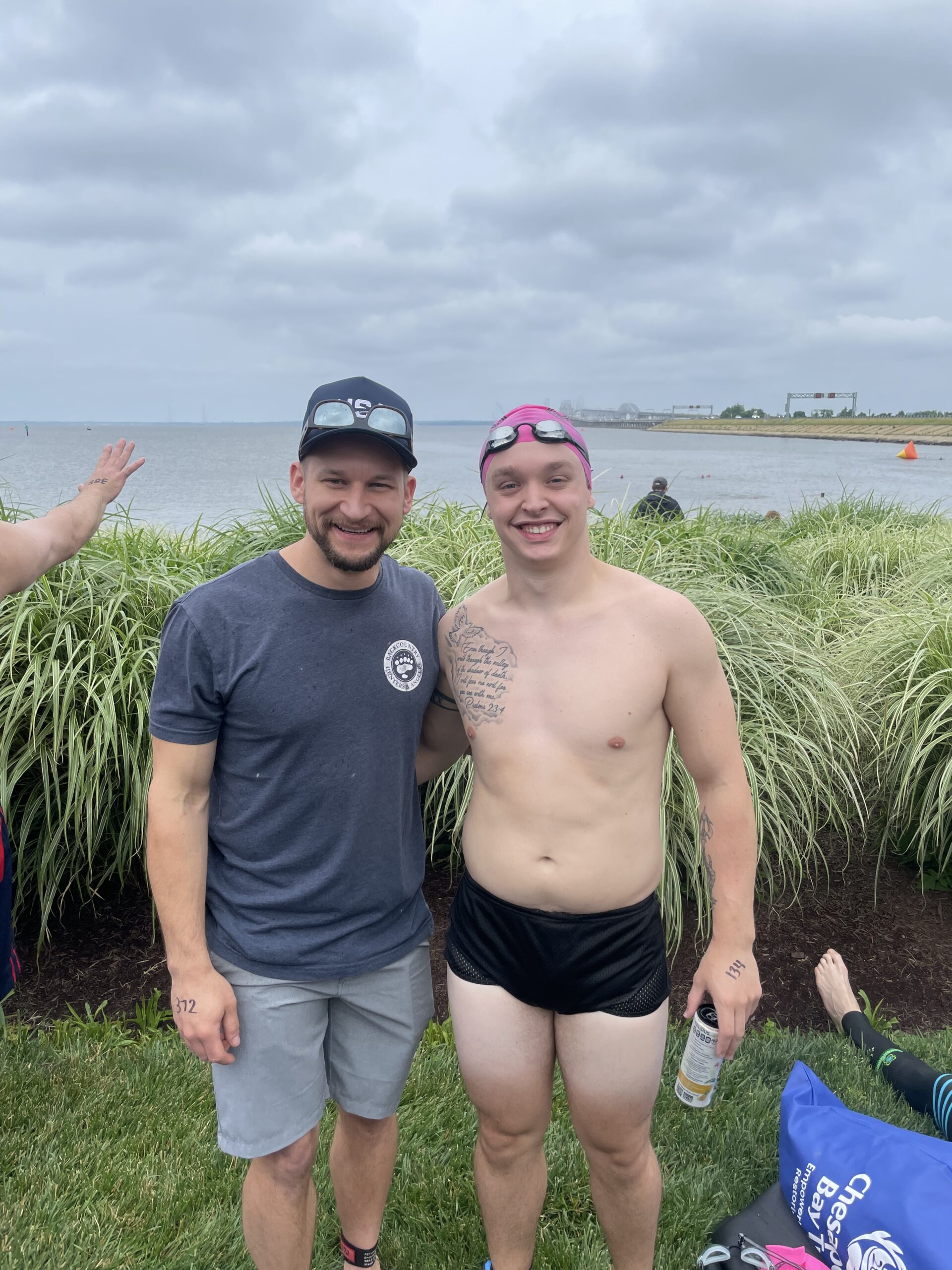
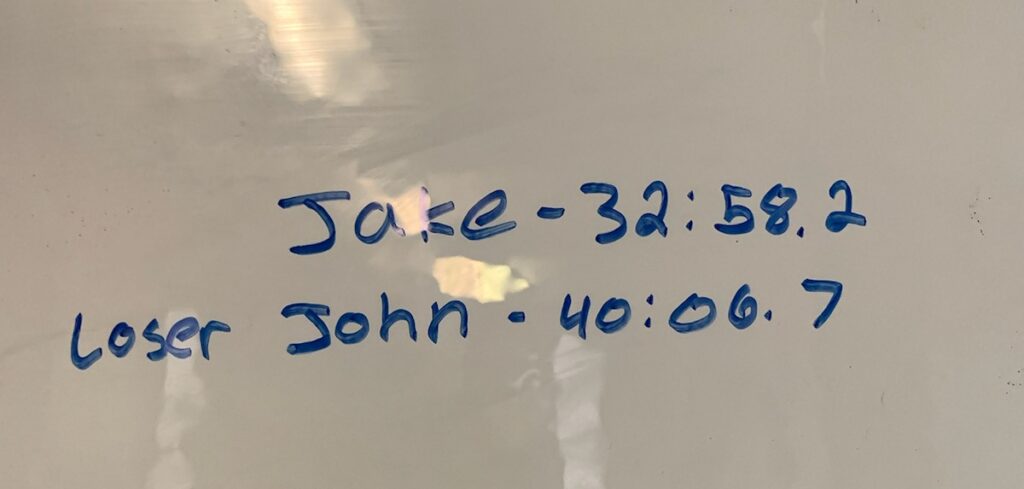
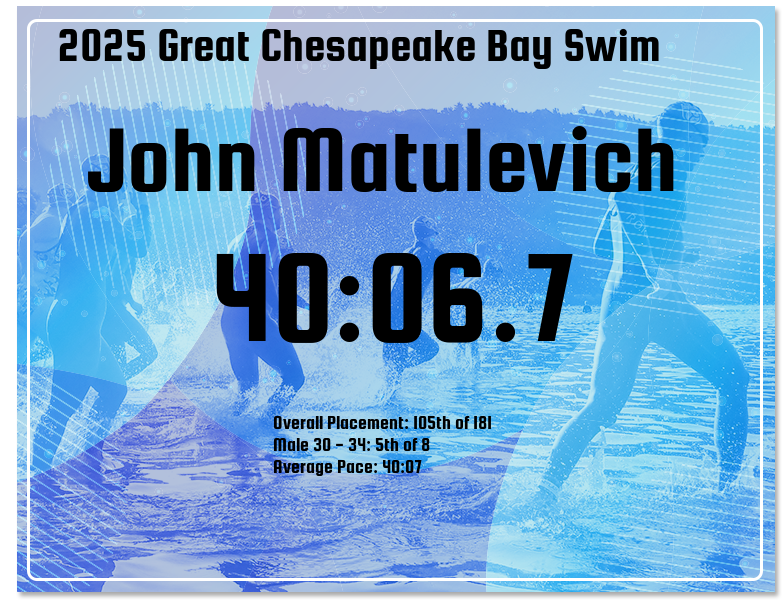
I spent two or more weeks leading up to this event essentially making myself out to be the heel, talking smack against fellow open water swim competitor and Ruthless Performance Coach, Jake Hillibush. As a current NCAA D2 Swimmer, smart money was obviously on Jake as a winner. This John vs. Jake storyline gave me something to shoot for, which is part of my normal ‘talk shit first, figure out a strategy later’ approach to competitive sport.
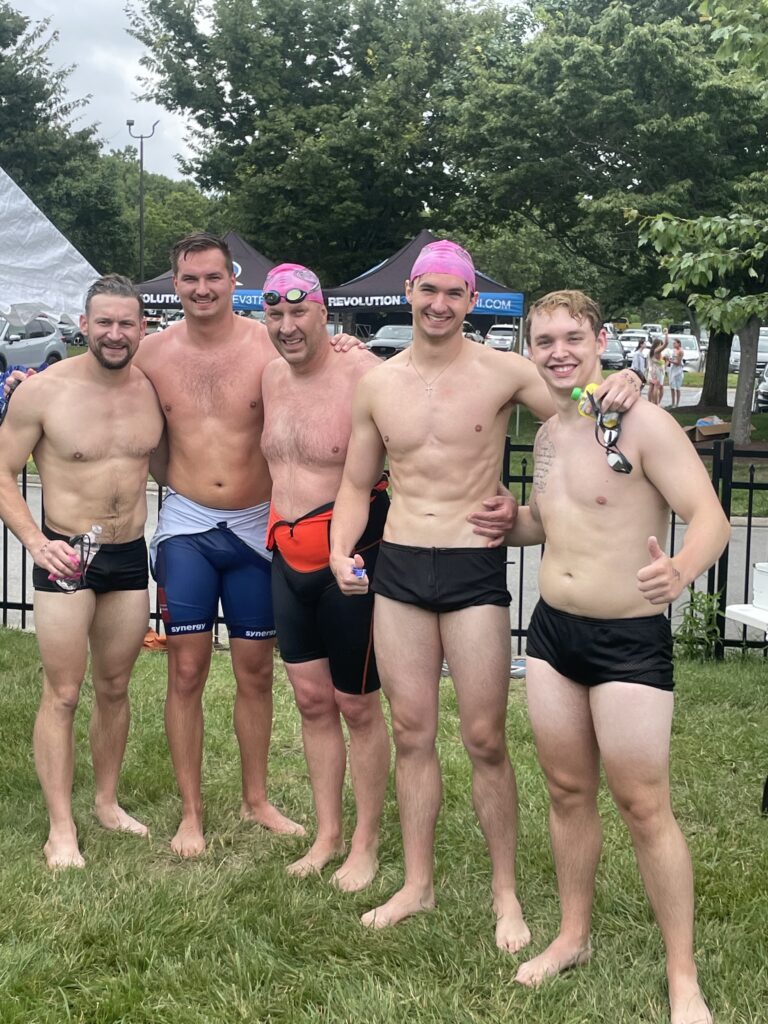
Jake and I began on the starting line next to one another, but since we were so close to the front of the swim, there was so much chaos, I immediately lost Jake right at the start and the high-visibility pink caps worn by all of the swimmers made targeting Jake an impossibility. We’re set for a rematch at next year’s swim and I hope he’s ready for the great open water whoopin’ of 2026.
Both Jake and myself have a history in competitive swimming, so our abilities were only limited by our conditioning at the time of the event. This differs, however, from my friend Sean who first told me about this swim. Sean does not have a history as a competitive swimmer. Without a childhood filled with early morning swim practices blasting proper swim technique into your brain, you are at a marked disadvantage. This broadly applies to triathlon competitors as well. Runners and cyclists have a much harder time gaining the ability to swim than a swimmer does trying to develop their ability to run or ride a bike.
If you find yourself in this category of athlete, who may have decent cardiovascular conditioning, but limited swimming skills, you are going to need a greater build-up to an open water swim. I would recommend starting your training at least a full year out and seeking out an experienced swim coach to give you some pointers.
1. Know the Difference Between Pool and Open Water
I didn’t use any wearable tech to track any data during my swim. Of the swimmers I talked to who did wear smart watches recorded their distances as much further than the swim was meant to be (ranging from 1.4-1.7 miles over a 1 mile swim). At a level of greater open water swimming competency, this is less likely to happen, but if you are planning your first open water swim, you may find yourself swimming much further than the course is meant to be. Similarly, don’t expect your open water swim times to be anywhere near the speed that you may have under the controlled conditions of a pool. Lane lines, good visibility, flip turns, and a greater degree of personal space afforded to you in a pool all make for a considerably faster time than you can expect in the wake of open water.
For your first open swim, I would set very attainable goals like finishing the event in one piece.
Now Find a Swim and Get Ready
Open water swimming is a low-impact test of endurance that you can do well into your late adulthood and with minimal equipment, the stats from this swim prove that. I competed in the 1-mile swim simply to get wet and gain a more solid understanding of open water swim. The 1-mile event was competed by two 10 year-olds and ages up through and including an 82 year old. The 4.4-mile event which crosses the full length Chesapeake Bay was completed by a 13-year old and up through and including an 83 year-old.
Start small and set basic, realistic expectations for your first open water swim.
Do you live in Schuylkill County area and want to train with us at Ruthless Performance? Or are you interested in training with us online? Our individualized Strength and Conditioning protocols can help you build your endurance, prevent overuse injuries rampant among swimmers, and give you the stamina to chase your goals for decades to come. Contact us to see how we can help turn you into the most resilient and strongest version of yourself possible.