Life gets busy–sometimes too busy for a conventional approach to in the gym. This can be one of those situations where the most optimistic ideal is the enemy of a pragmatic reality. Historically, my training has looked pretty conventional. Warm up, speed work, strength work, accessory work, conditioning work, in that order, done.
As of late, my training has gotten quite disjointed. A half-hour between clients to get some training, 15 minutes of extra time after a call wraps up early, and so on. Stringing these segments together has become a way of getting my training in all the same, but I’ve figured out how to more efficiently utilize these short durations to increase my training volume, target and improve neglected components of my own movement portfolio, and generally better my own posture, strength, cardio, flexibility, and overall athleticism while simultaneously having a more rigorous work schedule than ever before.
Shorter Workouts
Training with weekly totals concept has allowed me to shorten my workout times and get more training in at home, or whenever I have a few extra minutes (better to do some band pull aparts than to mindlessly pull out my phone and scroll). Personally, I still run a similar training style to what I have where I alternate between Lower Body / Upper Body / Conditioning workouts, but, now these workouts are nice and short.
Maybe I should explain exactly what weekly totals are now…
A Means of Detaching Accessory Work
At this point the weekly totals concept is still somewhat dynamic. But, in short, weekly totals are a way to do accessory training exercises over the course of the week, rather than at set workout times. I’ll strive to do a set number of reps in just a handful of exercises, then add either more sets or more weight each week for a 4-week period.
I’ve been introducing this same concept for our athletes. Want to get your gym workout in quicker but have a set of dumbbells or training bands at home? Weekly totals will definitely increase your training volume.
Each case is a bit different, some of our athletes have different exercises–even stretches or mobility drills done for a cumulative total time over the course of the week (i.e. a Pull-Up Bar Dead Hang for 5:00).
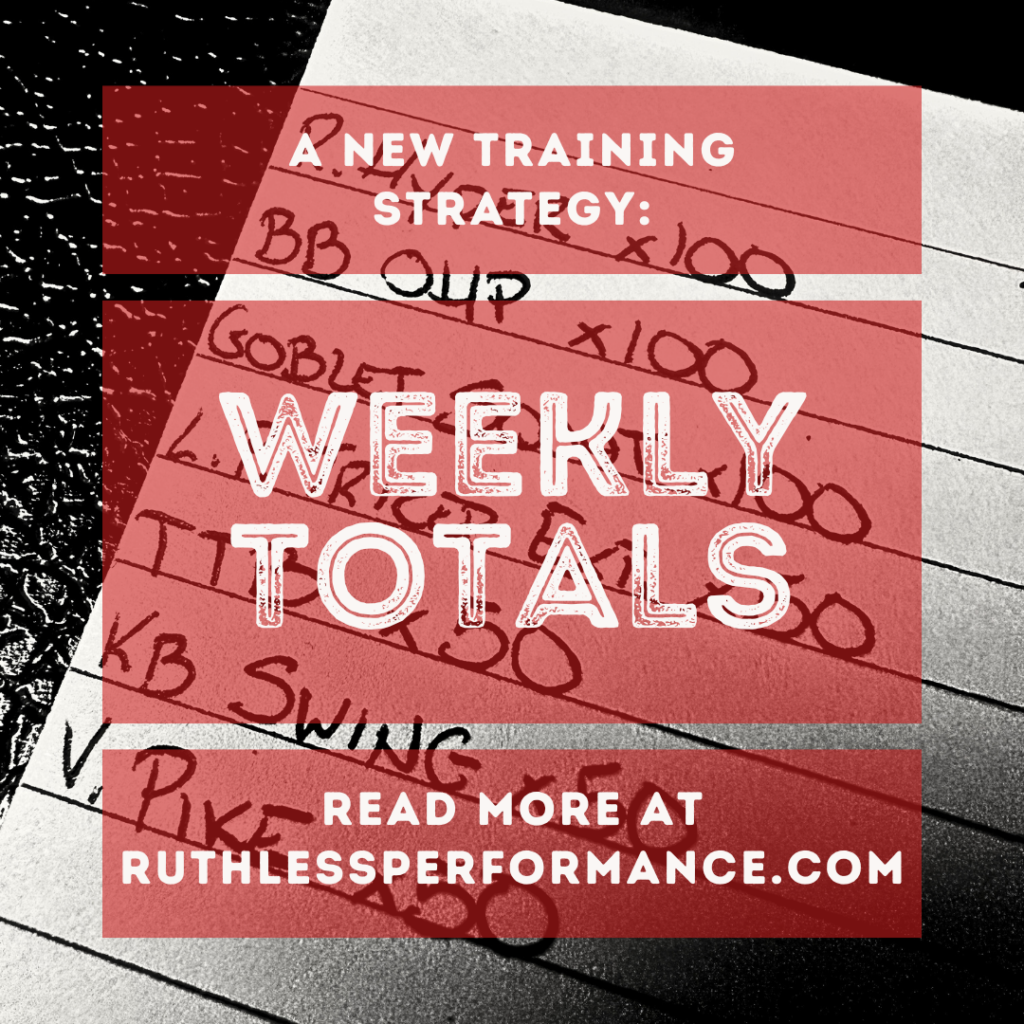
Here’s what I’m running in my weekly totals right now:
Week 1:
- Reverse Hyper x100
- Barbell Overhead Press x100
- Goblet Squat x100
- Lee Priest Triceps Extensions x50
- Toes to Bar x50
- Kettlebell Swing x50
- Valslide Pike x50
The rules of this training style basically state that my normal in the gym workout wouldn’t change beyond a reduction in accessory training (because now my accessory training can be done throughout the week). All I need to do is, some time between Sunday – Saturday, hit this total rep count on each of these exercises. I have a few kettlebells and dumbbells at my house so I can do Goblet Squats and Swings at home.
I’ll still do 1-2 seperately programmed accessory lifts while at the gym (in this case I’m doing more rotational and unilateral training while at the gym). But my overall training time required at the gym is reduced by offloading some of these supplemental exercises to the rest of the week.
As a coach, this has also given me an opportunity to work-in with athletes at the gym and increase engagement (and sympathy) with some of the athletes as I work through their sets with them to selfishly achieve my own weekly totals.
For some exercises like the Reverse Hyper, BB Overhead Press, and Goblet Squat, I’ll keep the reps at 100 but increase the weight–even if just slightly. For other exercises, I’ll increase the rep count. Lee Priest Triceps Extensions will increase up towards 100 reps over the course of four weeks, likewise with Toes to Bar, Swings, and Valslide Pikes.
Get More Out of Life
Training to achieve a cumulative total of repetitions on an exercise over the course of the week isn’t exactly how they tell you to train in the bodybuilding magazines, ironically, this higher frequency of training may enable better muscle building, though this isn’t our only goal. This style of training has certainly cut my workouts down from over an hour to a much more manageable 35-40 minute chunk.
If you want to program your own weekly totals, I would consider starting in the 500 rep per week range to get acclimated to this style of training and build up towards 1000 reps per week while keeping the main sets of your workouts the same. Additionally, weekly totals can help you get some movement while your routine is broken up by travel, busy seasons, or whatever life may throw at you which may otherwise reduce your overall ability to get unbroken workouts in.
Do you train with us or are you considering training with Ruthless? We can program weekly totals by themselves or as a supplement to your existing workout to maximize your time, helping you get more shit done.
Contact me directly to learn more.
Something to think about,
John.